
How can a golf course improve digital hospitality for someone searching golf courses, using Google?
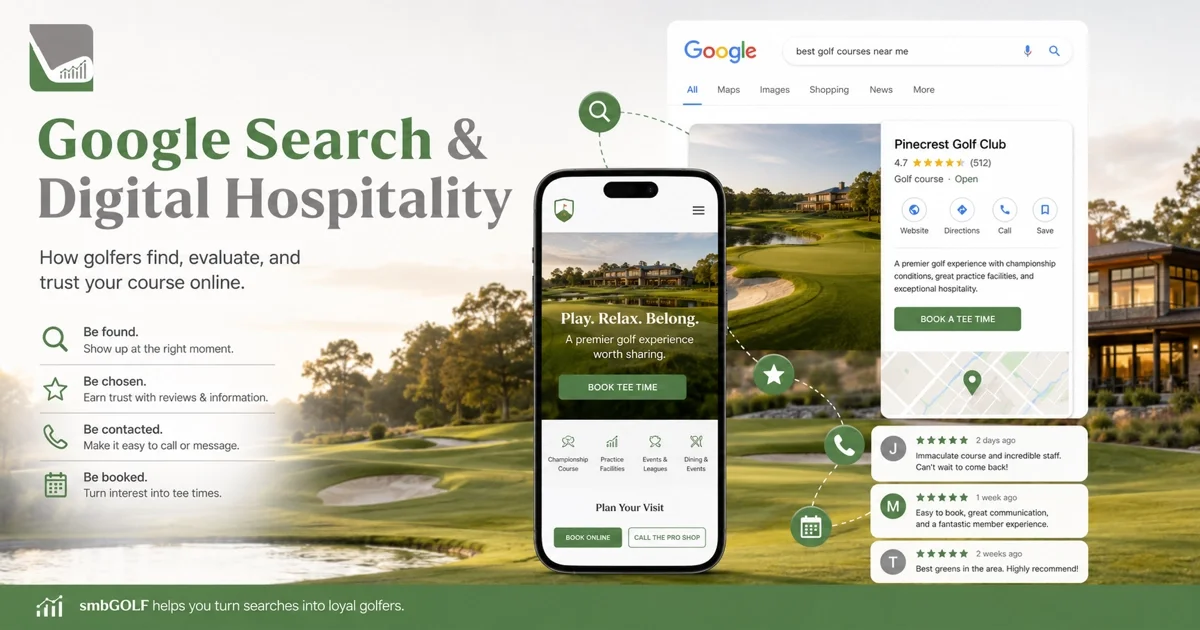
Google Search
To improve digital hospitality during a Google search, a golf course must recognize that this search is often the very first impression a golfer has of the facility. When a golfer's initial digital touchpoints are clear, accurate, and helpful, it builds immediate trust and confidence before they ever arrive at the property.
Here are several key ways a golf course can enhance its digital hospitality for Google searchers:
Actively Manage the Google Business Profile: Operators should ensure their Google Business Profile features accurate business information, strong photos, useful content, and a clear, simple path to either book a tee time or call the shop.
Highlight and Manage Reviews: A facility's real-world reputation needs to be visible online. Golf courses should actively manage and respond to Google reviews, as strong public reviews help searchers feel confident in their choice.
Implement Schema Scripts: Adding industry-specific schema markup scripts to the golf course's website helps Google and AI search systems easily understand the business's data and page structure, ensuring accurate information is presented in search results.
Optimize for Search Engines (SEO): Earning a high ranking on Google is critical for attracting new golfers. Courses can improve their visibility by utilizing SEO best practices, such as writing content for both humans and AI systems, utilizing AI writing assistants, and tracking performance with tools like Google Search Console.
Prioritize High-Speed Website Performance: A seamless transition from Google to the golf course's website is a major part of digital hospitality. High-speed performance is not only expected by users but is a major requirement for Google search rankings. Courses can achieve top speeds by using optimized images, fast servers, and a global content delivery network (CDN).
Deliver a Responsive Mobile Experience: Because a large portion of searches happen on phones, the website must automatically adapt to the user's device. A strong mobile design prevents "cognitive friction" by tailoring the experience—such as prominently displaying a click-to-call button exclusively for mobile users—so the golfer does not get frustrated trying to navigate a desktop site on a small screen.