
Digital Hospitality in Golf · Edition 3
Your next golfer may be searching from an hour away.
Most golf course websites are built for people who already know the course exists.
That makes sense on the surface. A golfer lands on the site, checks rates, finds the tee time button, maybe looks for the phone number, and books.
But a lot of valuable golfers do not begin with your course name. They begin with a trip, a lake weekend, a family visit, a nearby city, a highway corridor, a bachelor party, a conference, or a simple question:
“Where should we play golf while we are there?”
That golfer may be searching from 20, 40, or 90 minutes away. They may not know your brand yet. They may not know your town. They may not even know the right golf course names to compare.
This is where many golf course websites fall short. The site explains the operation to people who already know it, but does very little to help a new golfer understand where the course fits geographically, why it is worth the drive, and how quickly they can act.
True digital hospitality starts before the golfer knows your name. It helps them discover you, understand you, trust you, and book without having to work too hard.
This week’s thought piece
Stop building only for the golfer who already knows you.
We recently looked at this through the lens of Belmont Lake Golf Club in North Carolina. The opportunity was not simply to create another golf course page. The opportunity was to help Belmont Lake show up for golfers searching around nearby destinations, including Lake Gaston, Rocky Mount, and surrounding travel corridors.
A golfer planning a lake weekend may not search for Belmont Lake by name. They may search for public golf near Lake Gaston, golf courses near Rocky Mount, or a place to play during a weekend trip.
That is not just SEO. That is hospitality.
The website should answer the questions a real golfer is asking: Where are you? What are you near? What kind of experience should I expect? Why are you worth the drive? Can I book now?
🔎 Go deeper: three questions your website should answer for the out-of-market golfer
1. Where are you really located?
Not just your mailing address. What towns, lakes, hotels, highways, neighborhoods, and destinations are you near?
2. Why are you worth the drive?
Course conditions, layout, views, pace of play, value, practice facilities, food and beverage, outings, or anything else that makes the experience distinct.
3. Can the golfer act immediately?
Tee times, rates, booking links, directions, photos, FAQs, and contact options should be obvious. A golfer who is still deciding should not have to hunt.
🧭 See an example of destination-driven golf content →
📩 Email us your course name for one quick Digital Hospitality observation →
Featured webpage we appreciate
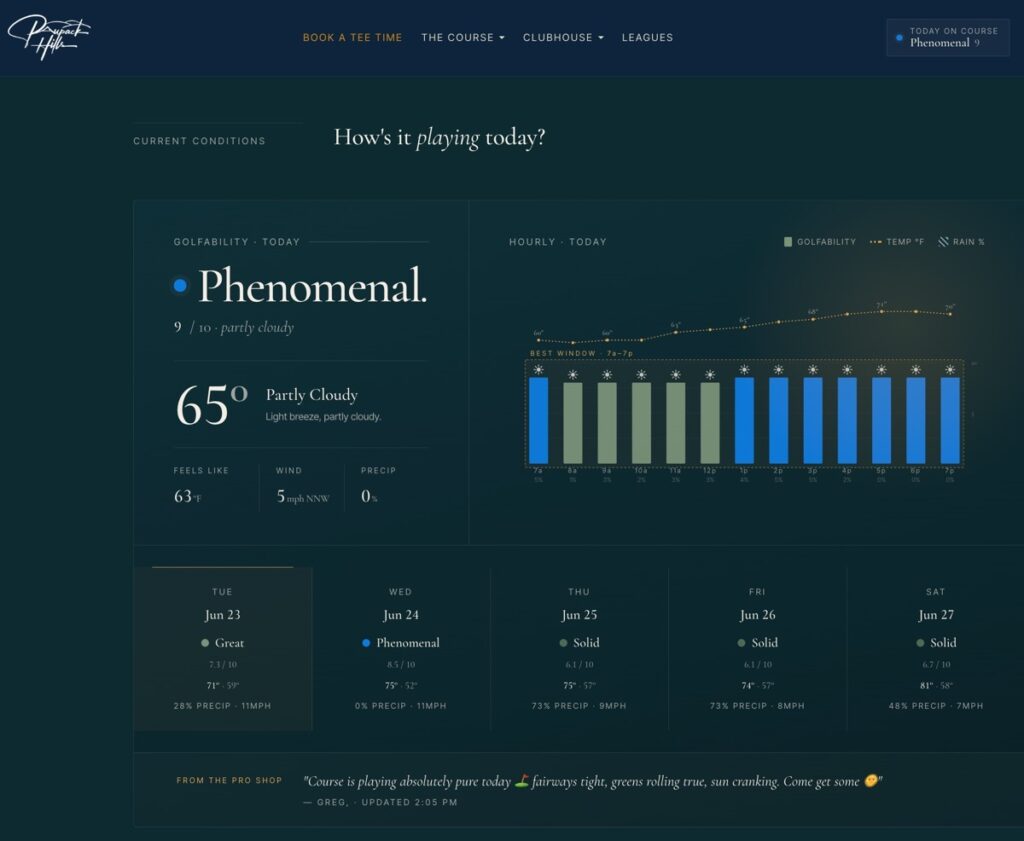
Golfability at Paupack Hills Golf Club
We did not build this page, but we appreciate what it represents. Paupack Hills owner and developer Greg Johnson has created one of the more unique digital experiences we’ve seen on a golf course website. Golfability gives golfers a simple way to understand how the course is playing today, turning current conditions into useful, golfer-friendly information.
Strategy note: Golfability is a great reminder that digital hospitality does not have to mean copying the same website structure every course has used for years. It can mean building tools that answer real golfer questions in a more useful way: How is the course playing? What should I expect today? Is this the right day to book?
Why this page works
It answers a golfer question: Instead of treating the website as a static brochure, Golfability gives visitors a more current sense of the playing experience. That is the kind of information golfers actually care about before making a tee time decision.
It shows what ownership-led development can unlock: Greg has also built a custom tee time booking experience on top of Paupack Hills’ Lightspeed Golf tee sheet and a strong member dashboard. That combination points to a bigger idea: golf course websites can become operating platforms, not just marketing pages.
For golf operators thinking beyond the standard website template, Paupack Hills is a useful example. The lesson is not that every course needs to build the exact same tools. The lesson is that the best digital experiences are often built around the real questions golfers and members are already asking.
Get the next edition
Digital Hospitality in Golf is free and comes every other Wednesday. Each issue is one or two ideas your team can use.