Digital Hospitality in Golf · Edition 7
Your technology partner’s bad day is still your bad day
On Saturday, September 5th, GolfNow Payments went down. Not a blip — a real outage, on one of the busiest days of the week, with credit card acceptance offline at courses across the country.
Here’s the uncomfortable truth about that day: the golfer standing at your counter with a full cart barn behind them doesn’t know or care that “GolfNow Payments” is a third-party processor bolted onto your tee sheet. They know your golf course couldn’t run their card. That’s it. That’s the whole story they’ll tell their buddies, and the review they might leave.
This is the part of Digital Hospitality that operators don’t love hearing:
Your responsibility to the customer does not transfer to your technology partner. You can outsource the plumbing. You cannot outsource the blame when it leaks.
GolfNow’s own status page logged the September 5, 2026 payment interruption shown above.
The courses that had a plan
Some of the 1,000+ courses caught up in the September 5th outage weren’t scrambling — they were annoyed, but they were accepting payments. Why? Because they’d already internalized something the rest of the industry needs to hear: GolfNow, and every other major platform in this space, will have service disruptions. Not might. Will. These operators didn’t wait around hoping it wouldn’t happen to them — they built a backup.
The move is embarrassingly simple and cheap: keep a standalone card reader in the pro shop that isn’t tied to your primary system’s uptime.
- A Square contactless/chip reader runs about $59, works independently of your tee sheet software, and only costs you standard processing rates (roughly 2.6% + 15¢) on the transactions you actually run through it.
- If you don’t even want to buy hardware, Tap to Pay in the Square POS app turns your own phone into a reader — free, instant, zero setup when you actually need it.
- Square also offers offline mode, which will queue swipes/taps when the internet itself is the problem — just know that you’re carrying the risk if one of those cards later declines.
None of this replaces your primary system. It’s insurance. And insurance only works if you buy it before the bad day, not during it.
If you think this was a one-off
This wasn’t an isolated Saturday. Here’s GolfNow’s own status page for the last four months running:
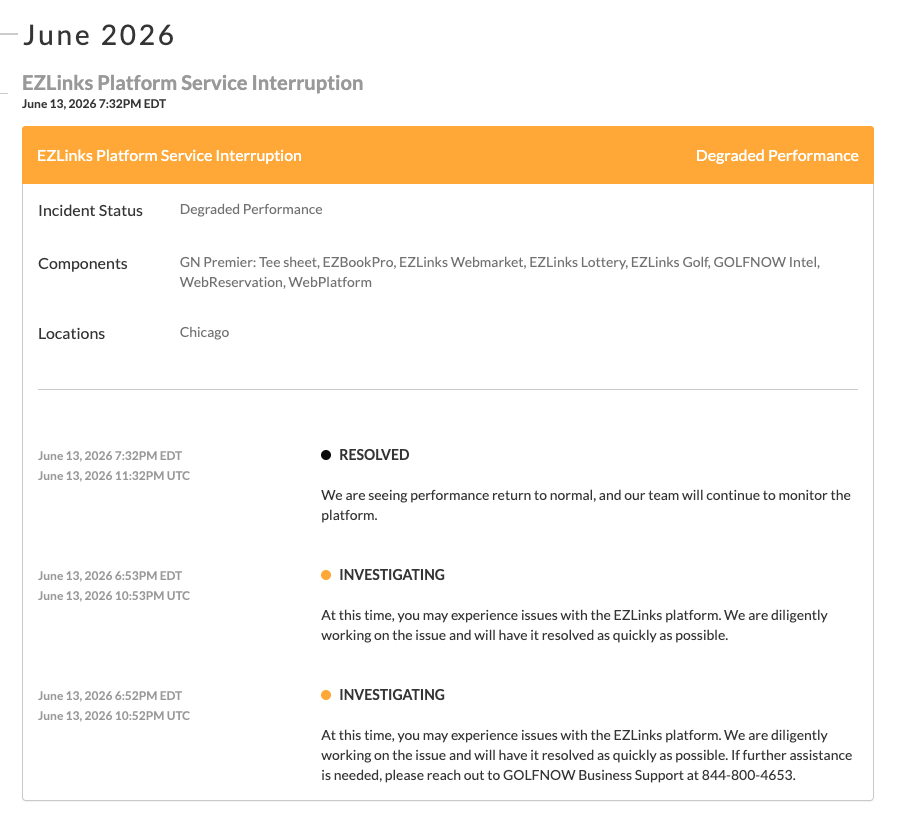
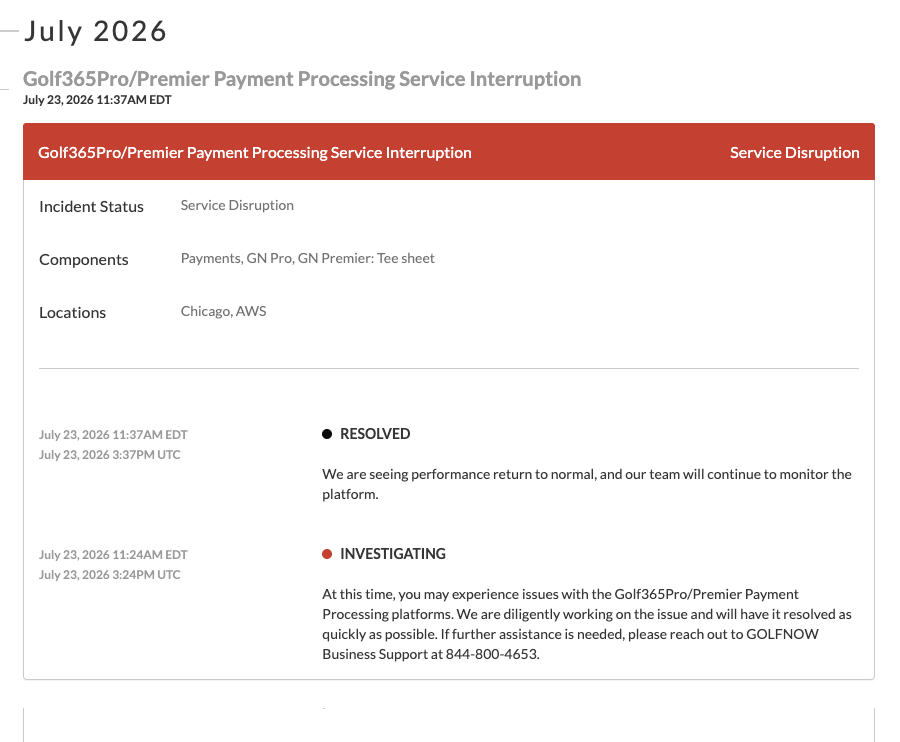
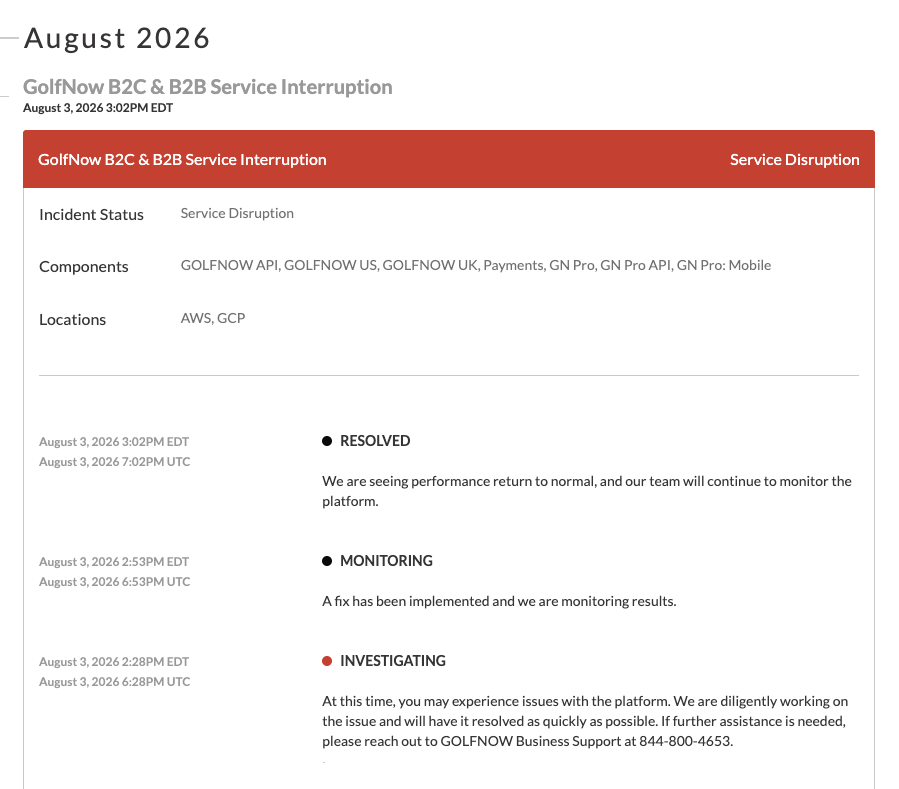
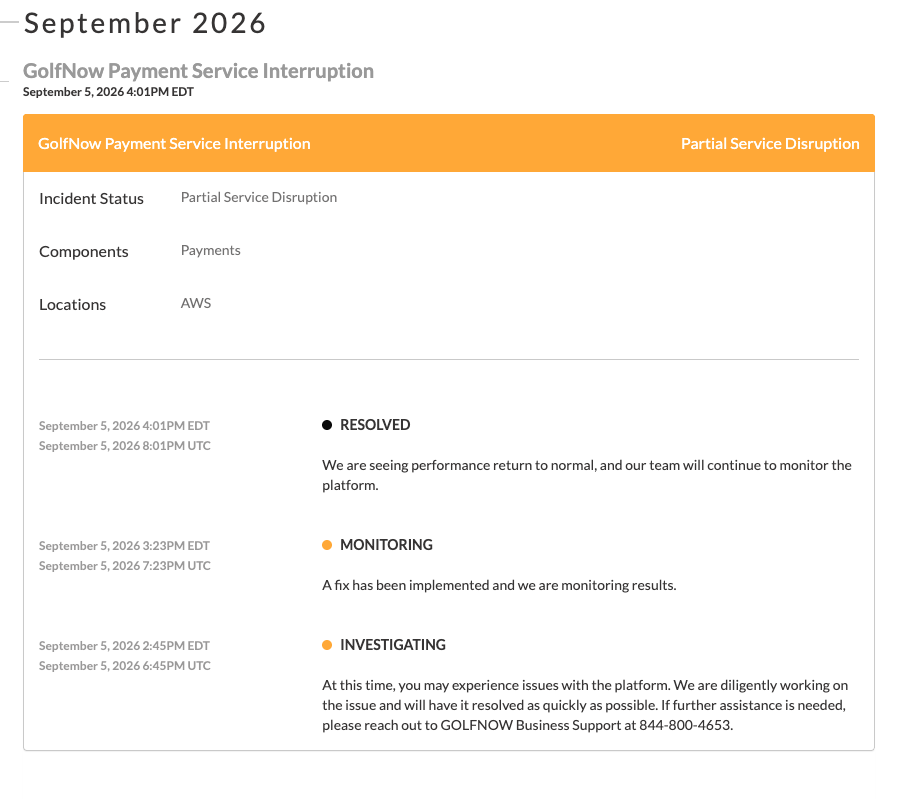
Four incidents, four straight months, across tee sheet, payments, or core platform components. If the largest software provider in golf struggles this much, it’s worth checking whether your other vendors do too. Two more worth bookmarking:
The lesson isn’t “pick a better vendor.” Every platform in this space will have a bad day, a bad week, or — as GolfNow’s own record shows — a bad four months in a row. The lesson is that you are the one standing in front of the customer when it happens, so you need the fallback plan, regardless of whose logo is on the software.
If you’re thinking about changing vendors, look up their status page. If they tell you they don’t have one, take pause. Ask yourself why the big guys do this and the smaller companies don’t. Is it cringe when GolfNow knows their status page looks bad? Of course it is — but at least they have transparency on their side. Nothing to hide, always trying to get better, but they refuse to not be accountable. That’s a plus in my book. GolfNow and every other vendor that runs a public status page deserve kudos for doing it right.
Small idea, big payoff
Let your event pages talk to AI
We’ve been using Golf Genius data to build out event recap pages for clients — here’s a recent one from EagleSticks’ Labor Day 3-Man Scramble. With a little formatting effort, the results look sharp for the golfers who played. But the real payoff shows up somewhere you won’t see directly: when AI platforms pull that structured event data to answer someone’s question about your course.
Here’s Google’s AI Overview answering a search for the event results, pulling the winning team, the full leaderboard, and the skins winners straight from the page:
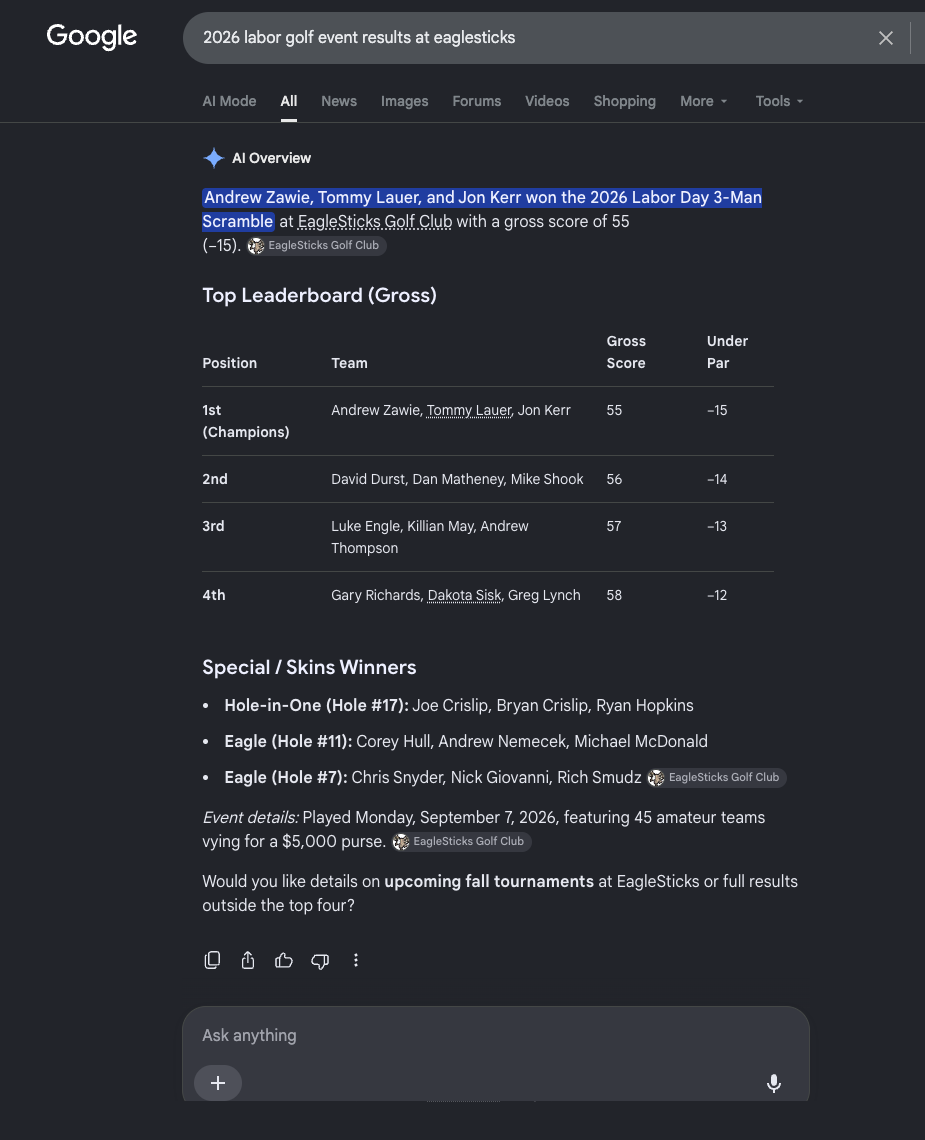
Your website isn’t just marketing anymore — it’s the source material AI tools are reading to answer questions on your behalf. A well-built event page does double duty: it’s a nice keepsake for this year’s field, and it’s a data point that makes your course more legible to the tools golfers are increasingly using instead of a search bar.
Get the next edition
Digital Hospitality in Golf is free and comes every other Wednesday. Each issue is one or two ideas your team can use.